|
|
|
|
DEALING WITH STRESS AND ANXIETY
Research has shown there has been an 'explosion' in stress and anxiety in Britain over the past decade, with the financial crash,
austerity, Brexit, climate change, social media, war in Europe and around the globe blamed for massive rises in the condition.
In addition, we've experienced a global pandemic, changes to how we live our daily lives, economic uncertainty, political and social turmoil.
Then there are personal traumas that people are also dealing with, such as the loss of a loved one, declining health, unemployment, divorce,
adversity and challenge. For many, this is a time of struggle and upheaval. Living through difficult times can take a heavy toll on mood,
health and outlook, leaving people feeling overwhelmed by stress and anxiety.
Stress and Anxiety .....The same right?
In reality, there is a marked difference between Stress and Anxiety. Knowing the difference means that you can access the right treatment.
Whilst the line between them is a fine one, both are emotional responses.
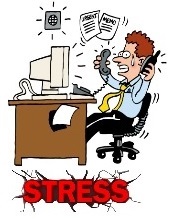
Stress
Stress is caused by an external trigger. These external triggers can be short-term such as
Stress causes mental and physical symptoms, such as
Of those experiencing stress,
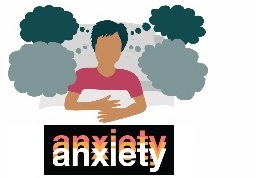
Anxiety
Anxiety is different to stress and is defined by persistent, excessive worries that don't go away even in the absence of a stressor.
Anxiety typically persists for months, negatively affecting mood and functioning. Anxiety leads to a nearly identical set of symptoms as stress.
Anxiety disorder is the most common mental disorder in the UK and it's not going away, it is in fact, getting worse.
In 2013 there were 8.2 million cases of anxiety in the UK.
Research undertaken by mentalhealth.org.uk found that:
In any given week in England the specific diagnoses are :
Added up this equates to 25% of the UK population!
If we are to deal with this serious and common threat to health we must first understand
What exactly is Anxiety?
Anxiety is a feeling of unease, such as worry or fear, that can be mild or severe.
Everyone has feelings of anxiety at some point in their life for example, you may feel worried and anxious
about sitting an exam, or having a medical test or job interview. During times like these, feeling anxious
can be perfectly normal. However, some people find it hard to control their worries. Their feelings of anxiety
are more constant and can often affect their daily lives. Anxiety affects people physically and mentally and the impact varies from person to person.
Typical symptoms include both physical and psychological sensations.
Physical sensations
Psychological sensations
The intensity of such symptoms can be physically debilitating, literally the 'rabbit in the headlights'
and devastating in terms of family, social life and career.
So, how do you deal with Stress and Anxiety?
There are several routes to a less stressed or anxious life.
Medication (Pills)
Medication such as a type of antidepressant called Selective Seratonin Reuptake Inhibitors
SSRI's are prescription only drugs available via your GP. SSRIs are the most commonly prescribed antidepressants
which are also prescribed for anxiety disorders. They can ease symptoms of moderate to severe depression, are relatively
safe and typically cause fewer side effects than other types of antidepressants do. The problem with medication is that
it masks the underlying cause of stress or anxiety which never gets resolved.
Alcohol
Some people try soothe their anxiety with alcohol. When dealing with stressful days or nervous situations, you may be tempted
to have a glass or two to calm your nerves. But alcohol is not a medication. And drinking alcohol, especially heavily and for
the long term, could actually increase your anxiety. Whilst having a drink might seem like a good idea to ease anxiety, you
may be doing more harm than good.
When it comes to anxiety, alcohol can be a cause for concern. Alcohol changes levels of serotonin and other neurotransmitters in the brain.
This can make your anxiety worse. In fact, you might feel more anxious after the alcohol wears off. Alcohol induced anxiety can last for
several hours, or even for an entire day after drinking.
The bottom line is that alcohol isn't stress or anxiety treatment and you should seek help from a professional rather than a glass.
Nutrition
Nutritional deficiency has been shown to deplete serotonin (a neurotransmitter influencing happiness). As such, it's important to eat a well balanced diet
You all know that a balanced diet is not a Mcd in both hands. Instead, base your diet on Fruit and veg, Whole grains, Lean meats, Fish, Nuts and legumes, Low-fat dairy and Olive oil.
Nuts, berries, leafy veg and fish also help to increase dopamine levels (that's the brain chemical which makes you feel pleasure).
Exercise
Recent studies suggest that exercise increases brain serotonin function (Post)
Exposure to bright light and daylight have also been shown to be of benefit.
Combine the two with a run or walk in fresh air or visit the gym if you prefer.
By developing Emotional Resilience
In physical science terms, resilience can be described as the capacity to bend without breaking to return to an original shape or condition.
When applied to the human psyche it means something different.
It's now well known that social isolation and low levels of social support are associated with high levels of stress and depression.
By being self aware, knowing what you need from a psychological standpoint and when it's time to ask for help, an individual can commence the road to recovery.
That journey starts simply by talking about the issues the individual is facing and the problems those issues are causing, which opens up a whole network of
support resources thereby leading to an improvement of the individual's emotional resilience capability.
Family and friends, peer group, workplace manager and/or colleagues, your Therapist and your GP are all well placed and invaluable sources of help.
All you have to do is talk to them.
Therapy
Therapy is the meeting of a Therapist and Client in a safe and confidential environment with the goal of resolving problematic beliefs, behaviours, feelings,
relationship issues, or negative physical responses.
Friends, family, partners or others may not know how to begin alleviating your painful situation, whatever it may be, or you might be completely alone
with it, and that's where a knowledgeable professional can help.
Most people who seek therapy are normal people who experience a rough patch in life. You can think about help seeking as a healthy coping mechanism to
deal with difficult situations.
Ignoring pain or chaos can have a real knock on effect on your life, and sometimes therapy is the best way to get through this.
Therapy is often not a quick fix. Therapy can be uncomfortable, particularly if you don't like to talk about yourself. The Therapist is there to
guide you with your internal journey, but they need your dedication and effort to look your innermost problems in the eyes, and to dive right through them.
It's a hugely brave thing to do, but the benefits you'll reap once you're on the 'other side' of your struggles will be massive and long lasting.
If you're struggling with anxiety and stress, the only mistake you can make is not asking for help..
References
CIPHR (Workplace stress statistics in the UK) available at www.ciphr.com/workplace-stress-statistics/
Women are almost twice as likely to be diagnosed with anxiety disorders as men. (Mental health statistics : anxiety 2020).
Debilitating mental illness has trebled among young adults, affecting 30% of women aged 18 to 24, and has increased across
the board among men and women under 55. (Guardian).

Source: (How common are mental health problems?, 2020)

Ian McLeod CHP(NC), MNSHP&M, DPLT
Mental Health Foundation. 2020. Mental Health statistics Anxiety [online] Available at : https://www.mentalhealthg.org.uk/statistics/mental-health-statistics-anxiety (Accessed 1 July 2020).
Mental Health Foundation & Yougov (stress statistics) available at www.mentalhealth.org.uk/explore-mental-health/statistics/stress-statistics
Mind.org.uk. 2020 How common are mental health problems? [online] Available at https://www.mind.org.uk/information-support/types-of-mental-health-problems/statistics-and-facts-about-mental-health-/how-common-are-mental-health-problems (Accessed 1 July 2020)
Mayo Clinic. 2023. Selective serotonin reuptake inhibitors (SSRIs) available at www.mayoclinic.org/diseases-conditions/depression/in-depth/ssris/art-20044825 (Accessed 12 November 2023)
NICE (National Institute for Health and Care Excellence) available at www.nice.org.uk
ONS. (2022). Quarterly personal well-being estimates - seasonally adjusted. Retrieved from
www.ons.gov.uk/peoplepopulationandcommunity/wellbeing/datasets/quarterlypersonalwellbeingestimatesseasonallyadjusted [Accessed 11/04/2023]
ONS. (2021). Depression or anxiety in adults, Great Britain: 22 September to 3 October 2021. Retrieved from www.ons.gov.uk/peoplepopulationandcommunity/healthandsocialcare/mentalhealth/adhocs/13844depressionoranxietyinadultsgreatbritain22septemberto3october2021[Accessed 11/04/2023]
ONS. (2023). Public opinions and social trends, Great Britain: personal well-being and loneliness. Retrieved from
www.ons.gov.uk/peoplepopulationandcommunity/wellbeing/datasets/publicopinionsandsocialtrendsgreatbritainpersonalwellbeingandloneliness [Accessed 11/04/2023]
ONS. (2017). Measuring National Well-being: Anxiety. Retrieved from www.ons.gov.uk/peoplepopulationandcommunity/wellbeing/datasets/measuringnationalwellbeinganxiety [Accessed on 18/04/2023]
ONS. (2022). Personal well-being in the UK: April 2021 to March 2022. Retrieved from www.ons.gov.uk/peoplepopulationandcommunity/wellbeing/bulletins/measuringnationalwellbeing/april2021tomarch2022 [Accessed 11/04/2023]
Post RM, Goodwin FK. Simulated behavior states: An approach to specificity in psychobiological research.Biol Psychiatry 1973;7:237-54.[PubMed] [Ref list]
Southwick, S.M., Charney, D.S. (2014) Resilience - The Science of Mastering Life's Greatest Challenges, 6th edition,New York, Cambridge University Press.
Statista (Costs of stress-related illnesses in the UK 2019) available at www.statista.com/statistics/1135048/costs-of stress-related-illnesses-in-the-uk/
Workplace Health Report available at www.championhealth.co.uk/insights/guides/workplace-health-report/
